
The Zcash Governance Crisis
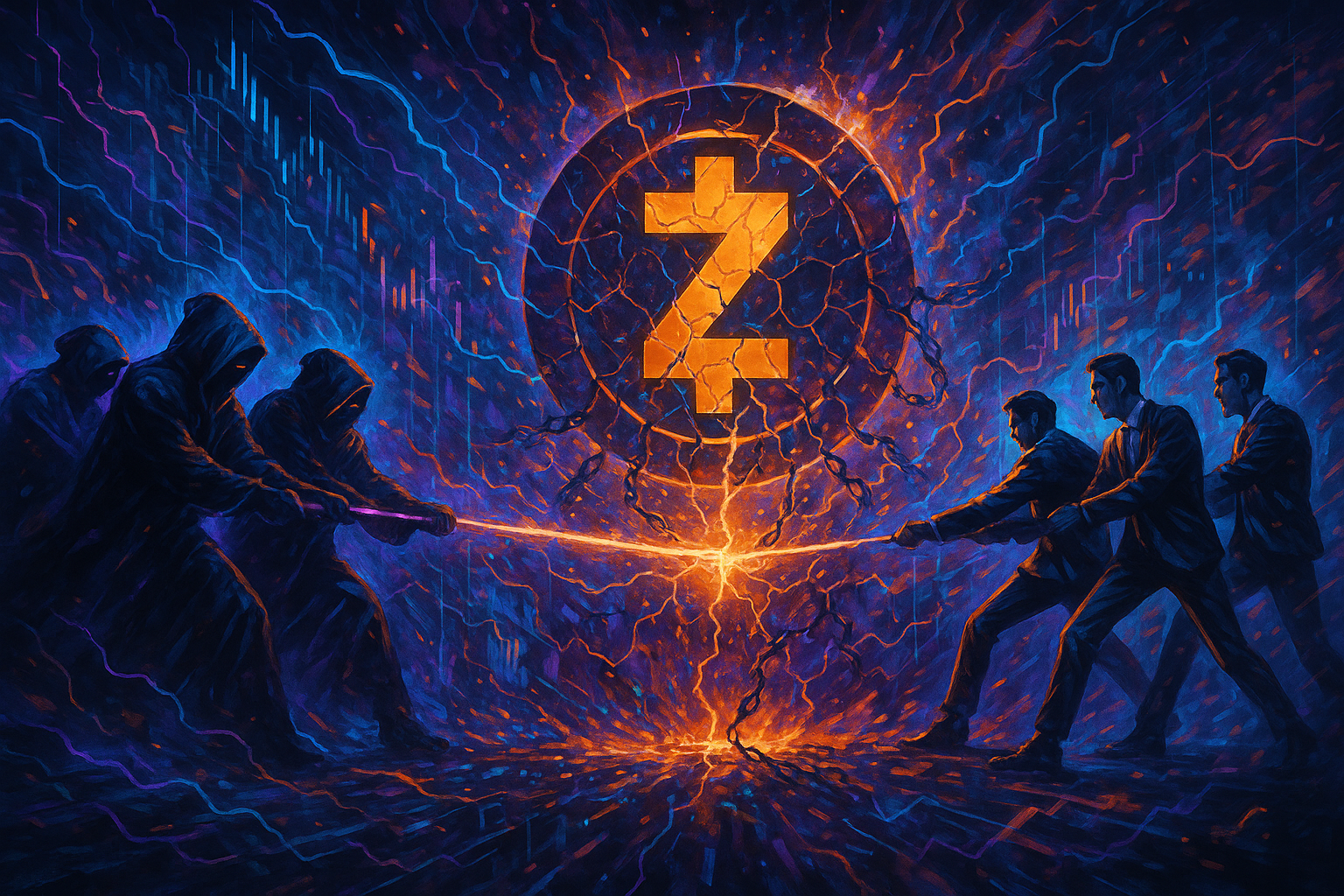
The Zcash world is going through a bit of a governance crisis right now.
Zcashers tend to be some of the most rational, thoughtful, and polite people around, and therefore the crisis seems more like a mild disagreement at first. But beneath the surface it could end up becoming more serious if not correctly resolved.
Probably just growing pains, but still worth reflecting on.
A little on my background: My undergraduate degree was in Statesmanship and my postgraduate degree was Global Affairs with an international law focus. My previous career was in grassroots politics and nonprofit fundraising. I lived through the Bitcoin block size war, and have been an active participant in the Dash DAO (the oldest DAO in existence) for almost 10 years. It’s safe to say I’m a bit of a subject matter expert.
What Is Zcash Fighting About?
To briefly summarize a long and complex list of technical disagreements in the Zcash community: a lot of the “old guard” want progressive, evolutionary features like shielded assets and hybrid security models, and the “new guard” want conservative advances focusing on drilling down on its core value proposition as “encrypted Bitcoin.”
Essentially, most of the improvements that now have become controversial were birthed when Zcash was struggling much more than it is today. To a certain extent, this struggle lit a fire under the community for change and to justify their survival. This is good (need for survival breeds innovation), but in some cases this may have led to an overreaction and a desire to “just try anything.”
On the other hand, the new guard that came about during Zcash’s present success era has less of a desperate need to try anything to survive. But also, it takes the current success era for granted, and may overestimate the value in being Bitcoin-like due to current market positioning.
My opinion: As with most things, I think the optimal solution lies somewhere between the two extremes, but I also think it lies much closer to the progressive side than the ossificationist side. I’ve been very vocal before about how I don’t think Bitcoin is something to be emulated in the modern era.
Note that, as someone primarily involved with Dash (technically a competitor), I should be happy about any smart improvement that doesn’t make it into the Zcash protocol. Dash already has a CrossLink-style security model, tokens, and is adopting Zcash’s privacy tech, so I should appreciate anything that gives it a competitive edge.
However, more than that, I believe more broadly in “more awesome things is better than fewer,” and that means I’d rather see Zcash do as well as possible (as well as Monero, Zano, and many other “competitors”).
How Is Consensus Polled?
Right now, Zcash doesn’t necessarily have an explicit governance mechanism. At the protocol level it has Nakamoto consensus (miner hashrate decides), which history has shown us is insufficient as a governance mechanism. Less officially, there are a few methods for polling the network to estimate where consensus may lie.
The first is community polling, whereby members of various Zcash community groups were polled on their opinion on several proposed network upgrades. The second part of that was a coinholder poll, where participants proved ownership of ZEC in order to participate.
The results were quite interesting: the community polling broadly favored most of the improvements on the table, but the coinholder voting was very aggressive in the opposite direction.
Two Harsh Governance Realities
While I can (and have) wax poetic about how the most elegantly-designed governance processes make everything turn out well, I have to acknowledge the brutal truth of what actually determines the outcome of a governance contest.
Harsh Reality 1: Effective Electioneering Wins
This is true in traditional electoral politics as well as crypto governance: whoever knows the rules of the game the best and plays it most effectively has an enormous advantage, even if they command a minority position.
What is blatantly obvious is that the pro-ossification camp was overwhelmingly more prepared and organized to participate in coinholder polling. ZSAs, which received strong support in almost every single one of the community polls, received a brutal 98.6% opposition in the coinholder poll. To believe this to be a purely organic outcome you’d have to convince me that either none of the communities polled held any meaningful amount of ZEC, or that they deliberately voted with their coins the opposite of how they voted in the other polls.
More likely, as only 7.2% of the Zcash coin supply voted, almost no one actually voted with their coins, and the pro-ossification camp, knowing that they had the new/emergent position, turned out heavily in this election. And again, fair game: play to win.
Harsh Reality 2: Might (Influence) Makes Right
The even more important factor than electioneering is influence. The big money, the most popular influencers, the most relied-on service providers, and the top developer talent, all determine the course of a cryptocurrency project more than anything else. The governance process is more of the language by which this is expressed, rather than the determining factor itself.
At the end of the day, the calculus is simple: which key players will be missed more if they leave the project? Josh and the ZODL team? Shielded Labs? Sean Bowe and the Tachyon team? Certain influencers? Investors like the Winklevoss twins? That’s what determines the outcome at the end of the day.
In Zcash’s case, which camp has more crucial influence isn’t necessarily so clear. But that’s ultimately how the governance crisis gets resolved: debates, polls, discussions, pontifications, and virtue-signalling will occur until key players settle on one side or the other in order to resolve the issue at hand. Then “consensus” will magically settle on the strongest side.
It’s also worth noting that, even though I characterized this as a binary conflict, there are quite a few different technical issues to be resolved, not all of which have the same level of support from both sides. The struggle will be had on an upgrade-by-upgrade basis.
And finally, thankfully, in a free market environment (which crypto ultimately is), end consumers and investors decide who’s right and wrong. The “encrypted Bitcoin” narrative may be the winning play that takes Zcash to Valhalla. Bitcoin may also crash and burn in a spectacular fashion, and investors may sour on any simplistic purely proof-of-work project. Time will tell.
Why Dash Has It Eas(ier)
Nothing is new under the sun. Governance crises have hit cryptos for many, many years now, since the block size wars in Bitcoin. I’ve also been a party to many of these in the Dash world over the past decade. In some ways Dash has it easier, because it’s a veteran of 11 years of governance struggles. But the biggest reason is because governance is a properly defined process.
In Dash, masternodes run the network, have to prove ownership of a certain amount of Dash, and can explicitly vote on budget proposals and the direction of the network. Whatever governance issue arises, the answer is always “Have the masternodes vote on it.” The harsh realities I outlined above still apply, but the game and its rules are well-known. No surprises there.
Zcash still has new, evolving, and insufficiently-defined governance mechanisms. You can still make arguments that coinholder voting doesn’t mean anything, or that there’s insufficient participation, or that other community sentiment polls are arbitrary. It would be helpful to Zcash to properly define everything with blunt specificity: who the stakeholders are, how they determine the network’s direction, and what the rules are for the governance process.
Future Research: DPoFS
One thing Zcash is doing right in theory (that Dash isn’t really doing) is acknowledging that coinholder votes aren’t the be-all-end-all, and that other voices in the community also matter in governance decisions.
I’m not sure the best way of doing this, but one idea I’ve had for a while is DPoFS: Delegated Proof-of-Fee-Spend. Essentially, lifetime power users of the network prove that they have contributed an aggregate amount of money in transaction fees, and use that to essentially delegate an amplification effect to coinholders.
The idea is to create a clearly-defined, Sybil-resistant way of defining “community,” so that this, once combined with coin ownership, more holistically represents network stakeholder status. This becomes particularly interesting when combined with a Network Sustainability Mechanism (NSM), as major NSM donors could be considered significant stakeholders for governance purposes.
But that’s a subject for a future article.
Posted Using INLEO




Leave a Reply